


How to Get Married in Australia: Legal Steps and What to Expect
The complete guide for local and international couples navigating Australian marriage requirements and paperwork.
• One federal law governs every marriage across all of Australia
• NOIM must be lodged at least one calendar month before your ceremony
• Two adult witnesses required at every legally recognised ceremony
• International couples from any country can legally marry in Australia
• Bilingual English and Cantonese celebrant services available nationwide
Start Your Wedding Journey
Reach out anytime, we work across time zones with couples based overseas.
What the Law Actually Requires to Get Married in Australia
One federal Act governs every marriage in Australia, the Marriage Act 1961 (Cth). It doesn't matter whether you're in Sydney, regional Queensland, or a garden somewhere in between. The same rules apply everywhere.
Four things are non-negotiable. A Notice of Intended Marriage must be lodged. A minimum waiting period of one calendar month must be observed. Two adults must be present as witnesses at the ceremony. And the marriage must be solemnised by an authorised celebrant or civil registry official.
Couples from Hong Kong, mainland China, South Korea, the United States, any country, can legally marry in Australia provided those four requirements are met. Nationality is not a barrier.
A marriage solemnised in Australia is legally valid here. Whether your home country recognises it is a separate question. Check with the relevant authority in your own country before the wedding, not after.
The Notice of Intended Marriage: What It Is and When to Lodge It
The Notice of Intended Marriage, the NOIM, is the document that formally notifies your celebrant you intend to marry. Lodging it is what starts the legal clock.
You can lodge it no earlier than 18 months before the ceremony and no later than one calendar month before. Most couples land somewhere comfortably in between. Your celebrant will confirm what suits your situation.
Both partners need to provide documents across three categories: proof of date of birth, proof of current name, and evidence that any previous marriages ended through divorce or death. Original documents or certified copies are required.
This is the step most couples leave too late, or don't know about at all. An authorised celebrant checks everything before lodgement, so nothing falls through the gaps. With the NOIM lodged, attention turns to what the law requires on the day itself.
Your Step-by-Step Wedding Planning Timeline for Australia
The legal process follows six steps, in this order:






The sequence matters. Each step depends on the one before it.
For couples planning from overseas, build in extra time. Document preparation, international postage, certified copies, and time zone differences all compress a timeline that looks generous on paper. A courier delay or a public holiday can shift things more than you'd expect.
According to the Australian Bureau of Statistics, around 78% of registered marriages in Australia are now solemnised by civil celebrants rather than religious ministers. A civil ceremony isn't the alternative, it's the norm.
International couples have a few additional considerations worth understanding before confirming a date.
Getting Married in Australia as an International or Destination Wedding Couple
Neither partner needs to be an Australian citizen or permanent resident to marry here. The same four legal requirements apply regardless of nationality.
The process is genuinely more involved for couples arriving from abroad. Document preparation, certified copies, international postage, and time zone differences add layers that domestic couples don't face.
"We are a couple from Hong Kong and were unfamiliar about the process of getting married in Australia." That experience is more common than most couples realise, and entirely navigable with the right support.
"She guided us efficiently and patiently throughout the entire process, from the initial consultation, preparing all the required wedding documents, to confirming the wedding date."
Once the marriage is registered in Australia, it's legally valid here. Recognition in your home country is a separate matter. Some countries require additional steps, apostille certification, local re-registration, so check with the relevant authority well before the wedding.
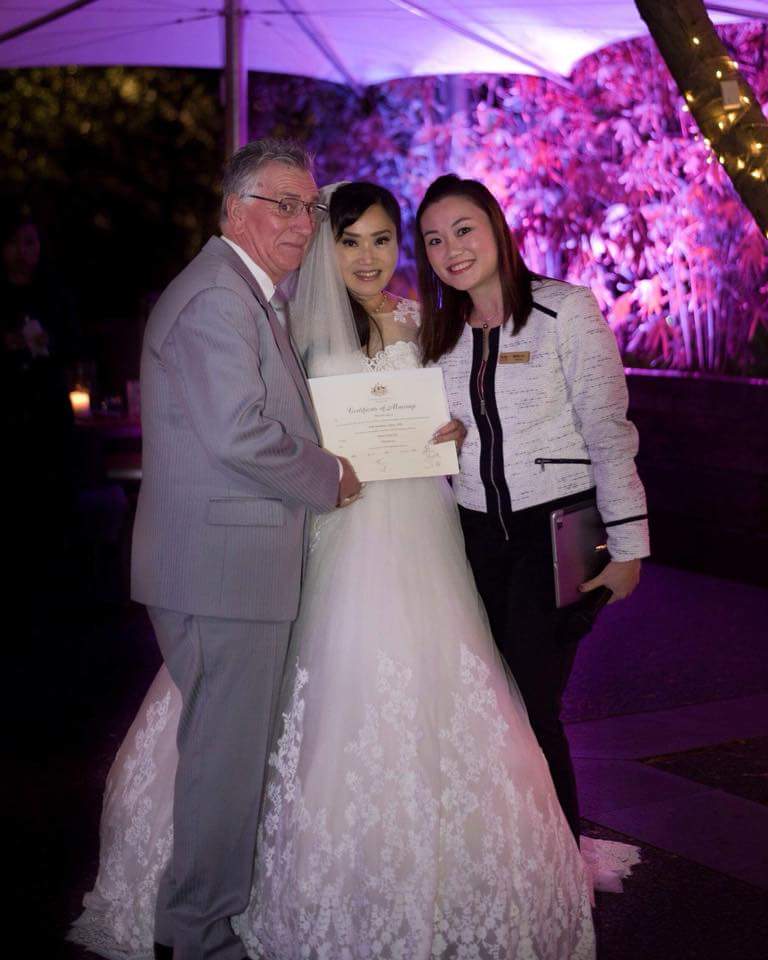
"We hadn't been in Australia before but we decided our wedding there. Planning this wedding overseas, they provided so much reassurance and trust." An authorised celebrant with direct experience handling international couples manages the legal documentation on your behalf, from any country or time zone.
When guests are travelling from overseas, what happens inside the ceremony matters just as much as what happens on paper.
Language, Cultural Inclusion and Your Marriage Ceremony
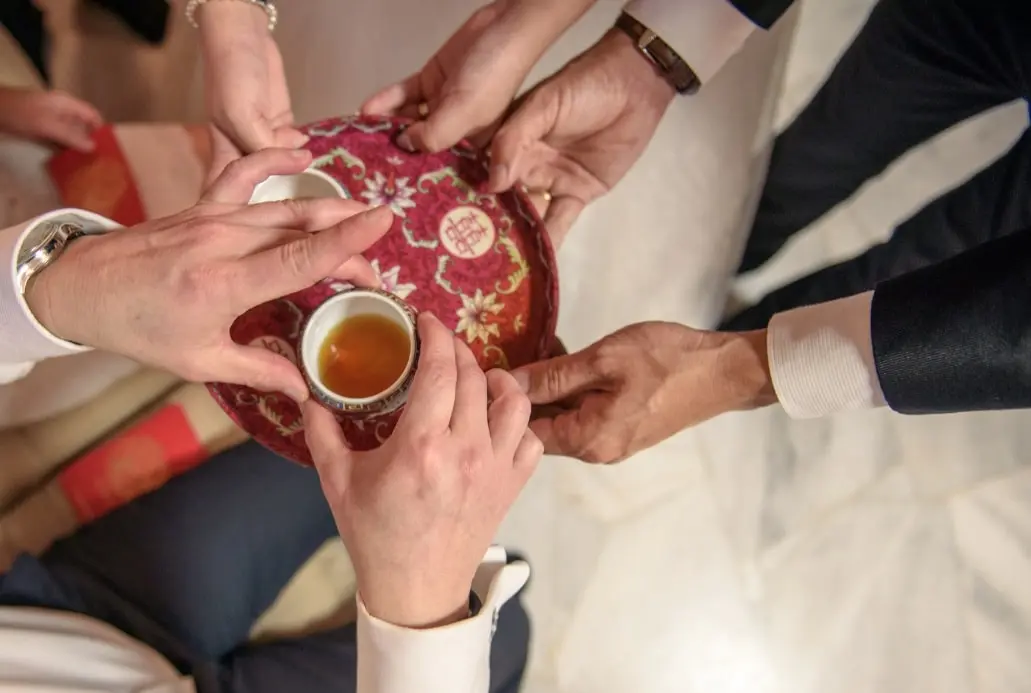
A ceremony that only part of the room can follow isn't fully shared. Guests who can't understand what's being said are present, but they're not quite there.
"We needed someone that could speak both English and Cantonese to ensure our guests at our ceremony were all able to understand what was happening." Betty is bilingual in English and Cantonese, a detail that shows up consistently across verified client reviews, and one that makes a real difference in a bilingual room.
Cultural fluency and legal knowledge aren't mutually exclusive. When a celebrant holds both, the whole room is part of the moment. Find out more about bilingual Chinese wedding ceremonies and how they work in practice.
The legal steps don't flex with the calendar, and the next section covers exactly what couples can and can't do when time is short.
Once the marriage is registered in Australia, it's legally valid here. Recognition in your home country is a separate matter. Some countries require additional steps, apostille certification, local re-registration, so check with the relevant authority well before the wedding.
"We hadn't been in Australia before but we decided our wedding there. Planning this wedding overseas, they provided so much reassurance and trust." An authorised celebrant with direct experience handling international couples manages the legal documentation on your behalf, from any country or time zone.
When guests are travelling from overseas, what happens inside the ceremony matters just as much as what happens on paper.

Can You Get Married Quickly in Australia? What to Know About Short Timeframes

The one-calendar-month minimum notice period is a legal requirement under the Marriage Act 1961 (Cth). No celebrant can waive it or work around it.
In limited circumstances, a shortening of time may be applied for through the Attorney-General's Department. It's not a standard pathway, check current eligibility criteria directly with the Attorney-General's Department before making any plans that depend on it.
Frequently Asked Questions About Getting Married in Australia
How do I get married in Australia?
Lodge a Notice of Intended Marriage with an authorised marriage celebrant at least one calendar month before your ceremony, provide valid identity documents, and hold the ceremony with two adult witnesses present. The process is governed by the Marriage Act 1961 (Cth) and applies nationwide.
How do I get married quickly in Australia?
The minimum notice period is one calendar month under the Marriage Act 1961 (Cth) and no celebrant can waive it. A shortening of time is available in limited circumstances, check current eligibility criteria directly with the Attorney-General's Department.
What is the legal age to get married in Australia?
The standard minimum age is 18. Rules around marriage under 18 have been subject to legislative change. For current requirements applicable to your circumstances, contact the Attorney-General's Department or an independent legal professional before making any plans.
Can you get married under 18 in Australia?
Australian marriage law contains specific provisions relating to marriage under 18, and this area has seen legislative change in recent years. For current, accurate guidance applicable to your situation, contact the Attorney-General's Department or seek independent legal advice before proceeding.
How much does it cost to get married in Australia?
Cost depends on whether you use a civil registry or engage an authorised marriage celebrant. Celebrant fees reflect the full scope of service, legal documentation, ceremony preparation, and on-the-day solemnisation. Contact Special Moment Celebrant for details specific to your ceremony.


Getting married in Australia is a straightforward legal process when you know the steps, and far less daunting when someone who has guided dozens of couples through it is handling the paperwork alongside you. If you're planning a wedding in Australia, whether you're based here or arriving from overseas, Special Moment Celebrant offers authorised, bilingual celebrant services across Australia. Reach out to begin.
